Showing posts with label lungs. Show all posts

Wednesday, July 29, 2020

Strengthen lungs at home with these tips

People often overlook keeping their lungs whole and well. Since the start of the pandemic, more individuals have been trying to take better care of themselves. Boosting the immune system and improving lung capacity have become a priority. Dr. Lisa M. Cannon shares on this post the best ways to keep lungs strong and healthy.
Image source: dtnext.in

Image source: nearsay.com


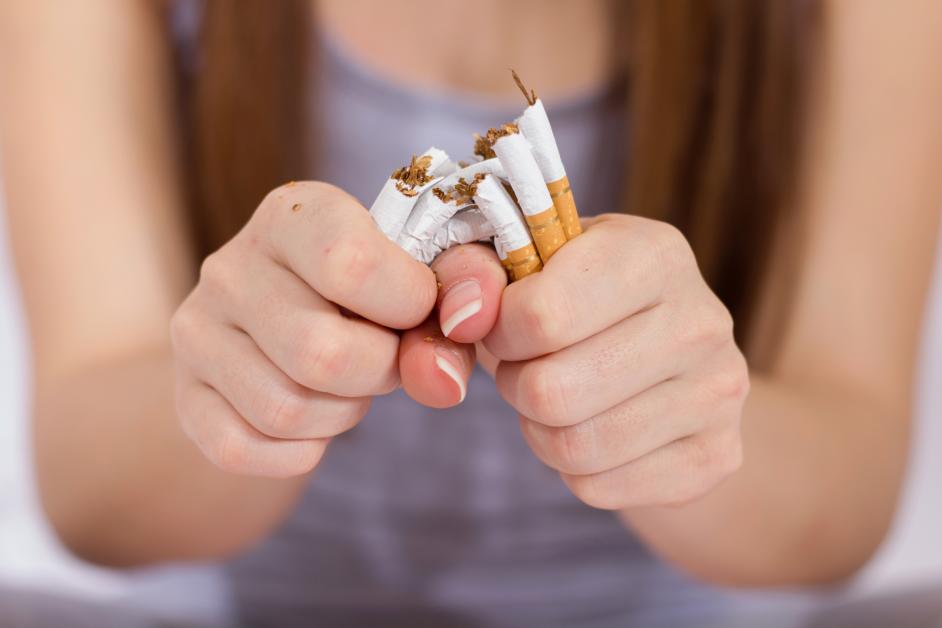
Avoid smoking. It has long been established that smoking increases a person’s risk of having respiratory problems such as asthma, idiopathic pulmonary fibrosis, COPD, and lung cancer. Exercise is integral in keeping the lungs in tip-top shape. Regular workout ensures that the heart is strong and the lungs are healthy. Having strong lungs helps a person’s body hold out against aging and sickness.

Check your posture in order to give the lungs enough space. Sitting tall and trying to reach above the head ensure the lungs are given room. The lungs have a mucosal lining that should be kept thin for the lungs to perform effectively. Stay hydrated by drinking enough water throughout the day. Laugh more to engage the abdominal muscles and improve lung capacity. According to pulmonologist Dr. Lisa M. Cannon, laughing removes stale air from the body, which permits fresh air to fill the parts of the lungs.

During these times, it is best to stay home to avoid air pollutants and viruses. With more industries reopening, it can be tempting to go out and enjoy a little bit of freedom. However, only go to public areas when it is necessary, and avoid staying out of the house too long to reduce the risk of catching the virus.

Dr. Lisa M. Cannon earned her medical degree from New York College of Medicine and her fellowship in pulmonary disease, critical care, and sleep medicine from Mount Sinai Hospital. Get quick updates from Dr. Lisa M. Cannon by following her on Twitter.

Tuesday, April 28, 2020

The dangers of thirdhand smoke

In the past, health authorities have raised awareness regarding secondhand smoke and its effects. However, the effect of a person's smoking habits doesn’t end when others inhale the fumes from a smoker's cigarette. Researchers from Yale University released studies on the so-called "thirdhand smoke.” In this blog, Dr. Lisa M. Cannon explains how it can affect people and the environment.
Image source: Bbc.co.uk

Image source: Medicalnewstoday.com
Thirdhand smoke isn't really smoke. These are tobacco contaminants that may remain in surfaces walls, carpets, beddings, and even in clothing. Places such as bars and movie theatres that can still smell like cigarette smoke even when no one is smoking indoors may most likely have these harmful particles. A home with one smoker can have nicotine and other toxic residues that can expose other residents to potentially dangerous fumes. As this is still a developing study, researchers are still considering whether e-cigarettes have the same effect.

Dr. Lisa M. Cannon shares that, according to the study, non-smokers can be exposed to nicotine and other toxic chemicals from public spaces that they could be sharing with smokers. What these researchers even discovered is that a person could have been exposed to up to 10 cigarettes in less than two hours. Thirdhand smoke can also be transmitted through a person's clothing. These particles can only be eliminated through meticulous and regular cleaning. Children and infants are most prone to the harmful effects. While the study is still developing, scientists are still gathering data on how it can damage a person's health.

Dr. Lisa M. Cannon is a board-certified physician who has been practicing for more than 15 years. She graduated with a degree in medicine from New York Medical College and completed her fellowship in pulmonary, critical care, and sleep medicine at the renowned Mount Sinai Hospital in New York. For more updates, visit Dr. Lisa M. Cannon on Twitter.

Tuesday, March 3, 2020

Increase lung capacity in five ways

Image source: besthealthmag.ca
Individuals who suffer from chronic obstructive pulmonary disease (COPD), interstitial lung disease, and pulmonary fibrosis often have difficulty in breathing. The fear of experiencing a flare-up may hinder them from living their best lives. In this blog, Dr. Lisa M. Cannon shares a few tips to increase lung capacity.

Proper exercise helps in increasing lung capacity. While it may seem counterintuitive to work out with COPD, getting the muscles in shape can improve breathing. Toned and strong muscles use energy efficiently. Breathing exercises such as pursed-lip breathing and diaphragmatic breathing help improve the use of proper muscles when breathing.

Keep the house clean. The air quality at home must be a priority, as it can be more polluted than the air outside. Houses and offices should be cleaned regularly to reduce allergens inside.

Image source: zyto.com
Eat smaller meals throughout the day. Doing this can lessen the chances of experiencing COPD symptoms, as eating large meals at a time can cause one’s stomach to bloat, thus pressing the lungs, keeping them from expanding to the fullest, and resulting in shortness of breath. When medical professionals say that smoking kills, we better believe it. Also, quit smoking and avoid second-hand smoke. Such environmental irritants make the lungs weak.

Dr. Lisa M. Cannon encourages individuals to get vaccinations for flu and pneumonia to help avoid contracting lung infections. In keeping the lungs healthy, one must be proactive; prevention is always better than cure. Improved breathing can help one experience better overall health.

Dr. Lisa M. Cannon is a board-certified specialist in pulmonary disease, critical care, and internal medicine. To continue giving her patients the best service, she completed her Master’s in Public Health from the NYU Wagner School of Public Service. Subscribe to this blog for similar reads.

Sunday, May 10, 2015

REPOST: Healthier lungs in California kids after pollution controls


A study conducted in California found better lung function among kids as the state's air quality improved.  This Reuters article provides the details.


(Reuters Health) - Doctors have long predicted that less air pollution will produce healthier lungs. Now a first-of-its-kind study of 2,120 children in southern California has documented dramatically better lung function growth as air quality has improved.
       
Image source: 5minutesformom.com

Over a 13-year period, the proportion of children with poor lung capacity and lung health fell by half as levels of nitrogen dioxide and particulate matter dropped. The gains were seen both in youngsters who had asthma and in those who did not.


“It certainly supports the efforts that have been made over 40 years to improve air quality,” chief author Dr. James Gauderman of the Department of Preventive Medicine at the University of Southern California in Los Angeles told Reuters Health. “We would expect improvements in other urban centers to produce similar improvements in children’s health.”
The study, published in the New England Journal of Medicine, complements research showing that childhood lung function deteriorates and the risk of asthma rises as pollution levels rise.


"This is an association study, so there's always a question of cause and effect. Maybe these people got healthier on their own, ate better diets. You can never say it's an absolute proof," said Dr. Norman H. Edelman, senior consultant for scientific affairs at the American Lung Association.


Image source: Inhabitat.com


"But it's not a standalone study. It's based on older studies that show an association between the degree of air pollution and lung function in kids. This turns around and looks at improvement," he told Reuters Health.


Gauderman and his colleagues examined the long-term effects in children by studying three groups during three time periods between 1994 and 2011. Typically, the children entered the study around age 11 and were followed for four years, a period when the lungs are developing rapidly. All lived in the Los Angeles area, a region of the U.S. known for air pollution problems, which have been abating as a result of strict state controls.


“We looked at the proportion of children whose lung function was below 80 percent of normal. That’s a cutoff a physician will often use to flag a person for a possible issue with their lungs,” Gauderman said. While 7.9 percent of children fell into that category in 1998, the proportion had dropped to 3.6 percent by 2011.

“We certainly suspected that improving air quality would improve children’s health,” Gauderman said. “We were surprised by the magnitude of the effect that we’ve seen.”


"What's news about this is the large magnitude of the effect, from 8 percent down to 4 percent," said Edelman, who was not connected to research. "Asthma is present in 10 percent of the population and that's a major health problem. If a percentage of those kids is going to have worse asthma because the air pollution has limited their lung growth, that's a big deal."


During the study years, the air improved “dramatically,” Gauderman’s team writes in their report. For example, in 1994-1997, each cubic meter of air in one of the most-polluted communities, Mira Loma, had 31.5 micrograms of small particles called PM2.5 that penetrate deep into the lungs. By 2007-2010, Mira Loma averaged 17.8 micrograms of PM2.5 per cubic meter of air, a 43 percent decline. All five study sites had significant drops in particle pollution and nitrogen dioxide, they note.


Overall, average lung capacity increased by 91.4 milliliters for every decrease of 14.1 parts per billion in nitrogen dioxide. It rose by 65.5 ml for each decrease of 8.7 micrograms per cubic meter of particle pollution. Significant changes were not linked to ozone levels, but levels of that pollutant have not declined as dramatically over time.


Image source: Phytofilter.com


“There were significant effects on lung-function growth in both boys and girls, although the magnitude of the air-pollution effect was significantly larger in boys than in girls,” the researchers conclude.


“We found no significant association between growth in height and change in pollution during the study period, which indicates that our findings on lung-function growth are probably not the result of a secular trend in general development,” they write.


California has stricter pollution controls than the U.S. as a whole, but Edelman said even the federal clean air act has cleaned up a lot of pollution "and this study is part of that. We're making progress. There's still a long way to go. We still have much more unacceptable effects of air pollution than we should have."


Dr. Lisa Marie Cannon is a board certified physician who specializes in pulmonary care.  Visit this Facebook page for more access to resources on related topics.